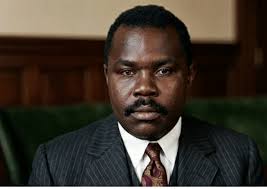
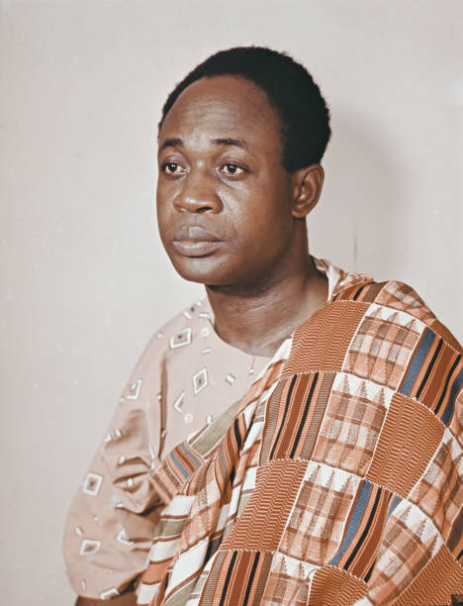
Portrait_of_Kwame_Nkrumah
The history of Africa’s liberation would not be complete without mentioning Kwame Nkrumah, who envisioned a continental union government for Africa through Pan-Africanism as a solution to the continent’s many economic, social, and political challenges. He was one of the most influential African leaders of the twentieth century a revolutionary thinker, freedom fighter, Pan-African visionary, and the founding father of modern Ghana. His leadership inspired independence movements across the African continent and helped shape the struggle against colonialism. A simple search of his name on Google reveals the story of a revolutionary leader whose vision for Africa extended beyond ordinary imagination and inspired generations across the continent. According to Kofi Hadjor (1986), “Nkrumah is a reminder not of what Africa is, but of what Africa must become.”
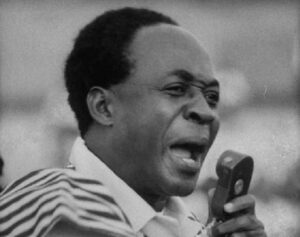
Born on September 21, 1909, in Nkroful in the Gold Coast (now Ghana), Nkrumah dedicated his life to the liberation of Africa from colonial rule and the unification of African people across the continent and the diaspora. His leadership helped transform Ghana into the first sub-Saharan African nation to gain independence from European colonial rule, inspiring liberation movements throughout Africa. Nkrumah trained as a teacher before traveling to the United States in 1935. He earned degrees from Lincoln University and the University of Pennsylvania, where he absorbed socialist and nationalist ideologies. He later continued his studies at the London School of Economics, where he helped organize the influential 1945 Fifth Pan-African Congress in Manchester. During his years abroad, he was deeply influenced by political philosophy, Black liberation movements, Pan-Africanism, and the struggle against racial injustice and actively involved in anti-colonial political organizing and worked alongside African and Caribbean intellectuals advocating for independence.
These experiences shaped his belief that Africa’s freedom could only be secured through unity, self-determination, and political independence.
Leading Ghana to Independence
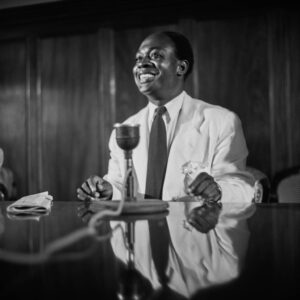
In 1949, Nkrumah founded the Convention People’s Party, a movement dedicated to self-government and national liberation. Using mass political mobilization, protests, speeches, and grassroots organizing, he inspired ordinary people to demand freedom from British colonial rule. On March 6, 1957, Ghana officially became independent, making it the first African colony south of the Sahara to achieve independence in the modern era.
During the historic independence ceremony, Nkrumah famously declared:
“The independence of Ghana is meaningless unless it is linked up with the total liberation of Africa.”
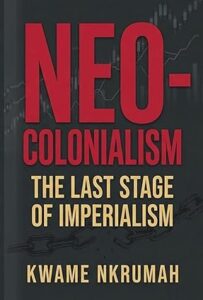
His famous book titled “Neo-Colonialism: The Last Stage of Imperialism” gives the political and economic analysis of how colonial powers dominate and controls the economy of Africa. this book is referred to as the most influential works on African politics, anti-imperialism, and post-colonial studies.
First President of Ghana
After independence, Ghana became a beacon of African pride and self-rule under Nkrumah’s leadership. He first served as Prime Minister and later became Ghana’s first President in 1960.
Kwame Nkrumah served as Prime Minister and later became Ghana’s first President in 1960 until 1966, after leading the country to independence from British colonial rule in 1957. His presidency focused on national development, African unity, industrialization, and education. Nkrumah introduced major infrastructure projects such as roads, schools, factories, and the Akosombo Dam to promote economic growth and modernization.
He strongly promoted Pan-Africanism and worked to unite African countries against colonialism and foreign domination. Under his leadership, Ghana became a symbol of African independence and liberation
Achievements Under His Leadership
- Expanded access to education across Ghana
- Built roads, schools, hospitals, and infrastructure
- Promoted industrialization and economic modernization
- Strengthened national identity and African cultural pride
- Supported scientific and technological development
- Invested in major national projects such as the Akosombo Dam
Nkrumah believed African nations should control their own resources and shape their own future without foreign domination. He encouraged education and youth empowerment, seeing knowledge as essential for African progress.
Challenges and Overthrow
Despite his achievements, Nkrumah’s government also faced criticism, Economic difficulties, political tensions, and concerns about authoritarian rule grew during his presidency. In 1966, while on a diplomatic trip abroad, he was removed from power in a military coup.
The overthrow marked a dramatic turning point in Ghanaian history, but Nkrumah’s influence continued far beyond his presidency. He spent his later years in exile in Guinea, where he remained active in Pan-African political thought until his death in 1972.
Kwame Nkrumah like every great visionary, faced many Criticism and challenges in government from Economic difficulties, political tensions, and concerns about authoritarian rule grew during his presidency, a significant one being a Military coup while on a peacemaking mission in Vietnam, Nkrumah was overthrown. This marked a dramatic turning point in Ghanaian history, but Nkrumah’s influence continued far beyond his presidency. Till date, most Ghanaians and Africans according to researchers point accusing fingers at colonial powers for this unfortunate incident that brought not only the newly born nation to the brink of collapse but also brought the dream of a united Africa into jeopardy.
Despite the controversy surrounding his rule, he remains one of Africa’s most influential political figures and a major symbol of African liberation and unity. One of Nkrumah’s greatest legacies was his commitment to Pan-Africanism, the idea that African people worldwide share common interests, history, and destiny. He believed Africa’s strength depended on unity and cooperation among African nations.
Nkrumah played a leading role in the creation of the Organization of African Unity in 1963, an organization that later evolved into the African Union. He supported liberation movements in countries still under colonial or minority rule, including:
- South Africa
- Angola
- Kenya
- Zimbabwe
- Mozambique
His vision of a united Africa made him one of the most respected political thinkers of his generation.
Books and Intellectual Legacy
Kwame Nkrumah was not only a politician but also an influential writer and philosopher. Some of his important works include:
- Africa Must Unite
- Neo-Colonialism: The Last Stage of Imperialism
- Consciencism
Through his writings, he warned about economic exploitation, foreign interference, and the dangers of political division within Africa. Kwame Nkrumah spent his later years in exile in Guinea, where he remained active in Pan-African political thought until his death in 1972. His ideas continue to influence scholars, activists, and leaders around the world.
Family and Personal Life
Nkrumah married Fathia Nkrumah, an Egyptian woman whose marriage symbolized African unity across regions and cultures. Together, they had children and became one of Africa’s most recognized political families during the independence era. Despite the pressures of leadership and political struggle, Nkrumah remained deeply committed to his vision of African dignity and liberation.
Honors and Recognition
Today, Kwame Nkrumah is celebrated globally as one of the founding fathers of African independence.
His legacy is honored through:
- Statues and monuments across Africa
- Universities and institutions named after him
- National holidays and commemorations
- Historical museums and memorial parks in Ghana
The Kwame Nkrumah Mausoleum in Accra stands as a tribute to his life and contributions to Africa.
A Legacy That Changed Africa Forever
Kwame Nkrumah remains one of the most important figures in African history. He gave voice to the dream of freedom when much of Africa was still under colonial rule. He challenged oppression, inspired independence movements, and believed in an Africa that could stand united, strong, and self-determined.
His story reflects the spirit of Ọkacha: leadership, courage, vision, and excellence that transforms generations. Because true greatness is measured not only by power, but by the freedom and hope left behind for others.
About the Author